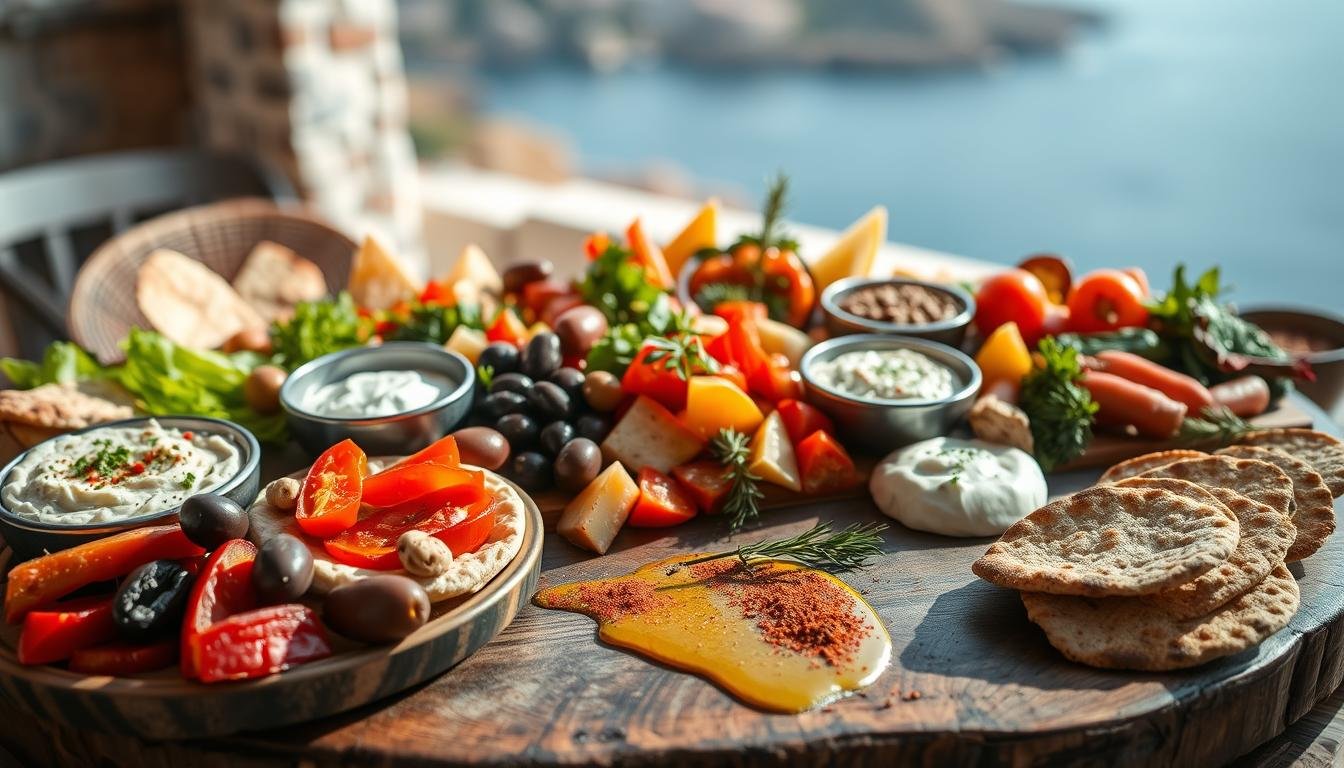
How to Make a Mediterranean Mezze Platter That Wows Guests
Creating Flavorful Dips and Spreads
The foundation of any memorable spread lies in its creamy anchors. Homemade versions offer brighter flavors and adjustable textures compared to store-bought alternatives. Let’s explore three classics that elevate your presentation while keeping prep manageable.
Crafting Essential Dips
Tzatziki shines with freshness: combine Greek yogurt, grated cucumber, minced garlic, and lemon juice. Finish with a drizzle of olive oil and chopped dill. For hummus, blend chickpeas, tahini, garlic, and lemon until smooth. Adjust consistency with ice water.
Baba ganoush requires roasted eggplant flesh mixed with tahini, garlic, and smoked paprika. Top with pomegranate seeds for contrast. These dips gain depth when rested for 1 hour before serving.
Zesty Dressing in Minutes
Whisk together lemon juice, minced shallot, and honey. Slowly pour in olive oil while mixing to emulsify. Add chopped basil and oregano for herbaceous notes. This recipe works as a dip enhancer or veggie drizzle.
Key differences between homemade and pre-made:
- Fresh garlic provides a sharper flavor than powdered versions
- Control sodium levels by adjusting salt additions
- Customize textures (chunky vs smooth) to preference
Balance acidic elements like lemon with rich oil bases for creamy results. Store leftovers in airtight containers flavors intensify overnight.
Seasonal Variations and Ingredient Swaps
Adapting your spread to the calendar ensures peak freshness and flavor. This approach lets you highlight nature’s rhythm while keeping your platter exciting year-round. Whether you’re working with summer bounty or winter staples, simple swaps maintain variety without extra effort.
Using Fresh Produce Based on the Time of Year
Summer calls for crisp snap peas, heirloom tomatoes, and chilled watermelon cubes. Swap these in autumn for roasted bell peppers or honey-drizzled figs. Winter versions might feature pomegranate seeds and citrus segments for brightness.