How to Make Truffle Mushroom Pasta Without Fancy Ingredients
Science Meets Simplicity in Technique
Starchy water from cooking pasta acts like culinary glue. When stirred into sauces, it creates silky cohesion. A large pot prevents noodles from clumping by giving them space to move freely. Always salt the water generously; kosher salt seasons evenly due to its coarse crystals.
| Component | Purpose | Impact |
|---|---|---|
| Kosher Salt | Enhances natural flavors | Prevents blandness |
| Large Pot | Ensures even boiling | Avoids sticky noodles |
| Heavy Cream | Provides fat content | Creates velvety texture |
| Low Heat | Prevents separation | Maintains sauce stability |
Heavy cream thrives on low heat – rushing this step risks grainy textures. Combine it gradually with pasta water to build a glossy finish. Whether you’re a novice or seasoned cook, these principles ensure consistent results every time.
Gourmet Techniques to Elevate Your Homemade Pasta
Transforming everyday meals into culinary masterpieces requires more than just quality ingredients; it’s about technique. Professional chefs rely on precise methods to build layers of flavor and texture. Let’s explore how simple adjustments can turn familiar components into something extraordinary.
Secret Tips for Emulsifying the Sauce
Perfect emulsification starts with temperature control. Heat butter and oil together on medium-low to create a stable base. Add liquids gradually while whisking constantly—this binds fat and water molecules into silky harmony.
| Technique | Benefit | Pro Tip |
|---|---|---|
| Gradual Mixing | Prevents separation | Use reserved pasta water |
| Low Heat | Preserves texture | Monitor with an infrared thermometer |
| Timed Whisking | Enhances creaminess | 20 seconds clockwise, then counterclockwise |
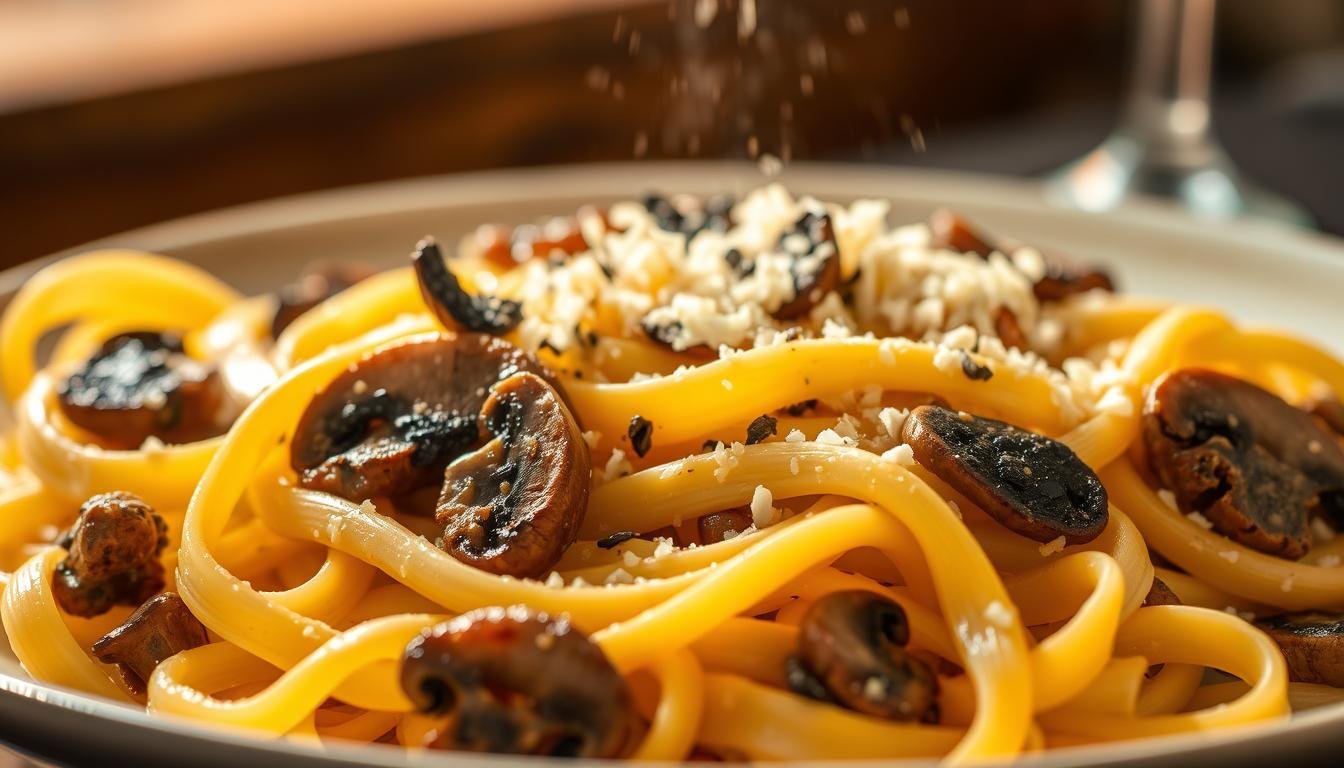
Slice mushrooms thinly for even cooking. Sauté them in the fat mixture until edges caramelize—this unlocks their earthy depth. Whole varieties work for rustic textures, but sliced pieces maximize surface area for flavor absorption.