Why Croissant Breakfast Sandwiches Are the Ultimate 2025 Office Comfort Food
The Ultimate Toasted Croissant Breakfast Sandwich Guide: America’s New Comfort Food in 2025
In the bustling morning routines of American life, one breakfast item has risen above the rest to claim its buttery, flaky throne. The toasted croissant breakfast sandwich, that perfect marriage of French patisserie and American practicality, has become the morning meal that people across the United States can’t stop talking about, making, or posting on their social feeds.
From New York diners to Seattle coffee shops, from home kitchens to drive-thru windows, this elevated handheld has transformed from an occasional indulgence to a daily staple for many. But what exactly has propelled this particular creation to breakfast stardom in 2025? Let’s dive into America’s latest food fixation and discover why the humble croissant has become the canvas for our breakfast dreams.
What Exactly Is a Toasted Croissant Breakfast Sandwich?
At its core, the toasted croissant breakfast sandwich represents the perfect intersection of convenience and luxury. Unlike its cousins served on English muffins, bagels, or basic toast, this creation starts with the most indulgent of bread options—the buttery, multi-layered croissant with its signature honeycombed interior.
The croissant breakfast sandwich falls squarely into what food trend forecasters have dubbed the “elevated basics” movement of 2025. It transforms the traditional grab-and-go breakfast sandwich into something worthy of a special weekend brunch and a rewarding weekday treat. The magic happens when that already-perfect pastry meets the toaster or griddle, creating caramelized edges while maintaining that distinctive pull-apart texture inside.
What makes this trend particularly American is the generous approach to fillings. While purists in Paris might shudder, Americans have embraced loading these delicate pastries with everything from classic egg-and-cheese combinations to creative culinary fusions. The result is a breakfast that feels familiar and special, comfort food reinvented for modern tastes.
3 Must-Try Toasted Croissant Breakfast Sandwiches
The Classic Egg & Cheddar Croissant
Found in coffee shops and drive-thrus from coast to coast, this version has become the gold standard of croissant breakfast sandwiches. Its popularity stems from the perfect balance of familiar breakfast flavors elevated by the croissant’s buttery complexity.

Ingredients:
- Fresh all-butter croissant
- 1 large egg
- 1 slice of sharp cheddar cheese
- 1 tablespoon butter
- Salt and pepper to taste
🍳 Instructions:
- Toast the Croissant
- Lightly butter the inside of the croissant and toast it cut-side down in a skillet until golden and crisp. Set aside.
- Cook the Egg
- In the same pan, cook the egg to your liking. Season lightly with salt and pepper.
- Melt the Cheese
- While the egg is still hot in the pan, place the slice of cheddar on top and cover for 20–30 seconds to melt.
- Assemble the Sandwich
- Place the cheesy egg onto the bottom half of the toasted croissant and close with the top half.
Tip: Using European-style butter on the croissant before toasting gives you a richer flavor and better caramelization. A nonstick skillet works best for this preparation.
The Veggie Powerhouse
As flexitarian eating continues to dominate food trends in 2025, this vegetable-forward version has gained serious traction in health-conscious cafes from Austin to Portland and everywhere in between.
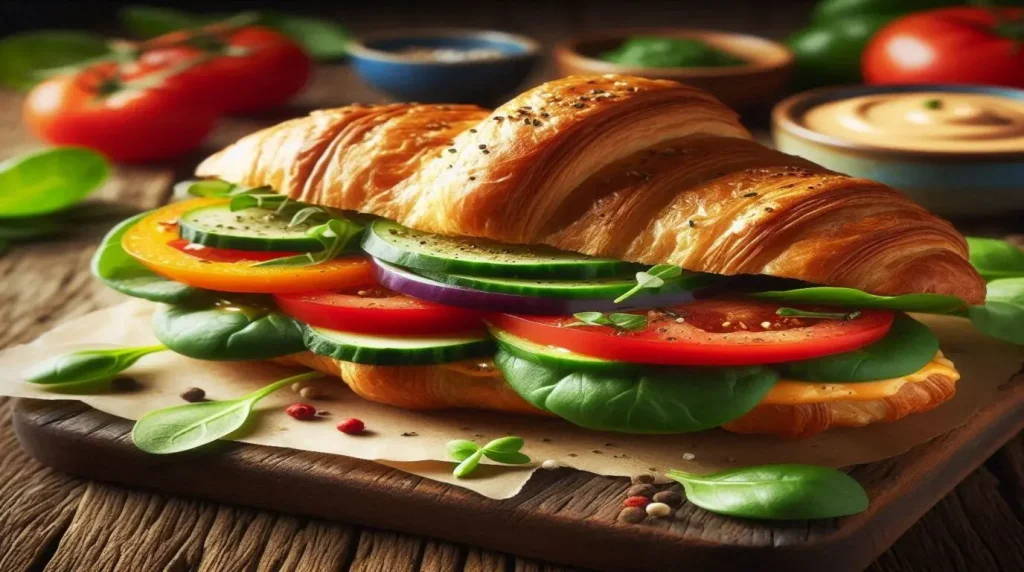
Ingredients:
- All-butter croissant (or whole-grain croissant)
- 1 egg or 3 egg whites
- ¼ cup grilled zucchini, thinly sliced
- A handful of baby arugula
- 2 tablespoons crumbled feta cheese
- 1 tablespoon basil pesto
- 1 teaspoon butter
- Salt and pepper to taste
🍳 Instructions:
- Toast the Croissant
- Lightly butter the inside of the croissant and toast it cut-side down in a skillet until golden and crisp. Set aside.
- Cook the Egg
- In the same pan, cook the egg or egg whites to your liking. Season lightly with salt and pepper.
- Melt the Cheese
- While the egg is still hot in the pan, sprinkle the crumbled feta on top and cover for 20–30 seconds to warm the cheese.
- Assemble the Sandwich
- Spread pesto on the bottom half of the croissant, add the grilled zucchini, top with the egg and feta, add arugula, and close with the top half.
Tip: A quick smear of pesto on both sides of the croissant gives this sandwich bold flavor without the heaviness of hollandaise or aioli. The fat in the pesto also creates a barrier that helps prevent the croissant from becoming soggy.
The Southwest Avocado Stack
This bold take on the croissant sandwich has been gaining serious traction on TikTok and appearing on trendy brunch menus across the country. It’s the perfect example of regional American flavors finding their way into this French-inspired format.

Ingredients:
- Large croissant
- 1 egg
- ½ ripe avocado, sliced
- 2 tablespoons black bean spread
- 1 slice pepper jack cheese
- 1 tablespoon butter
- Hot sauce or hot honey for drizzling
- Salt and pepper to taste
🍳 Instructions:
- Toast the Croissant
- Lightly butter the inside of the croissant and toast it cut-side down in a skillet until golden and crisp. Set aside.
- Cook the Egg
- In the same pan, cook the egg to your liking. Season lightly with salt and pepper.
- Melt the Cheese
- While the egg is still hot in the pan, place the slice of pepper jack on top and cover for 20–30 seconds to melt.
- Assemble the Sandwich
- Spread black bean spread on the bottom half of the croissant, add the cheesy egg, arrange avocado slices on top, drizzle with hot sauce or hot honey, and close with the top half.
Tip: Always add the hot sauce or honey drizzle after toasting, not before. This prevents the bread from becoming soggy while ensuring that bright, spicy-sweet flavor stays front and center.
Why Americans Are Obsessed with Croissant Sandwiches
The current croissant sandwich obsession isn’t just about flavor; it represents several converging trends in American food culture.
First, there’s the undeniable influence of café culture that has swept across American cities. As specialized coffee shops have multiplied, they’ve needed food options that match their elevated beverage programs. The croissant sandwich fills that need perfectly, offering something more sophisticated than a muffin but still practical for on-the-go consumption.
Second, the pandemic permanently altered American breakfast habits. With remote and hybrid work continuing to be the norm for many professionals in 2025, the traditional rush-hour breakfast has been replaced by something more deliberately chosen and enjoyed. People want their first meal to feel special, even if they’re just walking from their bedroom to their home office.
Finally, there’s the “affordable luxury” factor. In an economic climate where many Americans are carefully watching their spending but still want moments of indulgence, the croissant breakfast sandwich hits the sweet spot. It’s less expensive than a full sit-down breakfast but feels more special than a standard fast-food option.
How Fast-Casual Chains Are Reinventing the Breakfast Game
Major restaurant chains have taken notice of the croissant breakfast trend, with several national brands launching their versions in the past year. These corporate iterations have helped mainstream what began as a specialty café item, bringing toasted croissant breakfast sandwiches to suburban strip malls and highway rest stops across America.
National coffee chains now offer at least three croissant sandwich varieties on their permanent menus, while several fast-food companies have introduced limited-time offerings to test the market. The most successful have been those that maintain the integrity of the croissant itself while adding their signature flavor profiles to the fillings.
What’s particularly interesting is how these chains have had to adapt their operations to accommodate this more delicate bread option. Several have invested in specialized toasting equipment that can warm a croissant without crushing its layers or leaving it too dried out.
Croissant vs. Biscuit: The Breakfast Battle
In the world of breakfast sandwiches, regional preferences have always run strong. The Northeast has long favored bagels, while Southern states champion the flaky biscuit. The croissant represents something of a compromise candidate—one that offers the butteriness of a biscuit with a more cosmopolitan identity.
Nutritionally, they’re surprisingly similar. A standard croissant contains roughly the same calories as a biscuit of equivalent size, though the croissant typically has more layers and a more complex preparation process. What the croissant offers that the biscuit doesn’t is texture variety—that contrast between the crisp exterior and the soft, pull-apart interior.
The croissant also benefits from its perception as being slightly more upscale. While biscuits carry comfortable associations with home cooking and tradition, croissants evoke European cafés and pastry expertise. In America’s evolving food culture, that subtle positioning has helped propel the croissant breakfast sandwich into the spotlight.
Social Media’s Role in Food Trend Acceleration
It’s impossible to discuss the croissant breakfast sandwich trend without acknowledging social media’s role in its popularization. The visually striking nature of these sandwiches, particularly the moment when they’re pulled apart to reveal melting cheese stretching between layers, has made them Instagram and TikTok favorites.
Food creators have embraced the format, creating endless variations that showcase seasonal ingredients or unexpected flavor combinations. The hashtag #CroissantSandwich has accumulated over 2.5 billion views on TikTok alone as of early 2025, with content ranging from home recipes to reviews of the best versions available in different cities.
What makes these sandwiches particularly well-suited for social sharing is their accessibility. Unlike some viral food trends that require specialized equipment or hard-to-find ingredients, croissant sandwiches can be recreated by almost anyone with access to a bakery and basic breakfast ingredients.
Homemade or Store-Bought: Best Tips for Croissant Sandwiches at Home
While picking up a professionally made croissant sandwich remains popular, many Americans have embraced making their versions at home. The key decision: whether to make croissants from scratch (an ambitious project) or start with store-bought.
For most home cooks, high-quality store-bought croissants offer the best balance of convenience and quality. Bakery-fresh is ideal, but even grocery store options can shine with proper handling. The key is in the toasting method; a quick pass in a buttered skillet or a few minutes in an air fryer can revive even day-old croissants.
Assembly order matters significantly when making these at home. Professionals recommend placing cheese directly against both sides of the bread, creating a moisture barrier that prevents soggy results. For make-ahead versions, keeping wet ingredients like tomatoes or sauces in separate containers until just before eating helps maintain that crucial texture contrast.
Perhaps most importantly, temperature variations create the most memorable experience. The ideal homemade croissant sandwich features warm protein, melted cheese, and some element that remains cool and fresh, whether that’s crisp lettuce, sliced avocado, or a refrigerated sauce added at the last moment.
Frequently Asked Questions About Toasted Croissant Breakfast Sandwiches
Are croissant sandwiches healthier than bagel or biscuit ones?
From a purely caloric perspective, croissant-based sandwiches typically contain slightly more fat than their bagel counterparts but fewer carbohydrates. A standard all-butter croissant (about 2 ounces) contains approximately 240 calories before fillings, compared to about 245 calories for an average plain bagel.
The nutritional profile ultimately depends more on the fillings than the bread choice. A croissant with egg whites, vegetables, and a moderate amount of cheese can be a balanced option, providing protein, healthy fats, and some vegetables to start your day.
What’s the best way to toast croissants without drying them out?
Professional chefs recommend split-toasting, cutting the croissant in half horizontally, and toasting only the cut sides. This preserves the exterior flakiness while providing a sturdier surface for fillings.
For home preparation, a cast iron skillet with a small amount of butter or oil yields the best results, toasting for just 30-45 seconds per side. Toaster ovens work well at low settings (around 300°F) for about 3 minutes. Standard pop-up toasters should be avoided as they tend to overheat and dry out croissants.
Can I freeze croissant breakfast sandwiches?
Yes, with some caveats. Fully assembled croissant sandwiches can be frozen, but the texture will change upon reheating. For best results, wrap each sandwich individually in parchment paper, then aluminum foil, before placing in a freezer bag. When reheating, remove the foil but keep the parchment, and warm in a 325°F oven for about 15 minutes.
For optimal quality, consider freezing components separately, Cooked eggs and proteins can be frozen in portions, then assembled with fresh croissants after thawing.
What are good vegetarian or vegan filling options?
Vegetarian options beyond the standard egg and cheese have flourished in the croissant sandwich world. Popular combinations include:
- Scrambled eggs with roasted red peppers, spinach, and goat cheese
- Grilled portobello mushrooms with caramelized onions and Swiss cheese
- Avocado with heirloom tomatoes, microgreens, and herb spread
For vegan versions, plant-based eggs have improved dramatically in recent years, with several national brands offering products that scramble remarkably like conventional eggs. Cashew-based spreads can replace cheese, while vegetables like roasted sweet potatoes add satisfying heft.
How do coffee shops keep croissants crispy with hot fillings?
Commercial establishments use several techniques to maintain that crucial texture contrast. Many use specialized rapid-heat ovens that warm fillings quickly without steaming the croissant. Some pre-toast the croissant halves, then add fillings and serve immediately.
Another professional trick involves creating moisture barriers—spreads like aioli or cream cheese on both cut sides of the croissant help prevent absorption from wetter ingredients. Strategic layering also helps, with most shops placing cheese directly against the bread to create an additional barrier.
Conclusion: Why the Croissant Breakfast Sandwich Perfectly Captures America’s Food Moment
The toasted croissant breakfast sandwich has earned its place in America’s culinary spotlight by perfectly embodying what we want from food in 2025: comfort with a touch of luxury, convenience without sacrificing quality, and traditions reimagined with contemporary twists.
This seemingly simple creation manages to balance nostalgia with novelty, offering the familiar satisfaction of a breakfast sandwich while elevating the experience through better ingredients and thoughtful preparation. In a time when many Americans are more conscious than ever about what they eat, the croissant sandwich represents a deliberate choice, an everyday indulgence that feels justified rather than guilty.
Whether you’re grabbing one from your local café, ordering through a delivery app, or creating your own at home, the toasted croissant breakfast sandwich is more than just a trend—it’s a testament to how even the most fundamental meals can be reinvented to bring fresh joy to our daily routines. With endless variations possible and social media continuing to showcase new interpretations, this flaky, satisfying creation shows no signs of surrendering its spot at the breakfast table anytime soon.