From Easter to Thanksgiving: Seasonal Celebration Cuisine Ideas You’ll Love
Seasonal Celebration Cuisine: Irresistible Ideas for Every Festive Moment
Holidays are a time to come together and celebrate traditions with family and food. Whether it’s an in-person gathering or a virtual event, food remains the common thread that brings everyone to the table.
The changing seasons bring unique ingredients and traditional dishes that reflect both cultural significance and local produce availability. From spring’s Easter brunches to winter’s festive feasts, celebration cuisine connects us to our cultural heritage.
Key Takeaways
- Explore traditional and modern holiday recipes from Easter to Thanksgiving.
- Discover how different cultures celebrate various holidays through food.
- Learn about the cultural significance and symbolism behind traditional celebration dishes.
- Find inspiration for creative twists on classic holiday meals.
- Understand how food brings people together during the year.
The Joy of Seasonal Celebration Cuisine
Seasonal celebration cuisine brings people together through the universal language of food. At Common Threads, we know that food is rooted in culture and tradition. We encourage children and families to learn about the world around them through our recipes, while also embracing their family traditions.
How Food Connects Us Through Traditions
Food traditions serve as cultural touchstones that connect generations and preserve heritage. Holiday meals often follow recipes passed down through family lines for decades or even centuries.
The Cultural Significance of Holiday Meals
The celebration of holidays with traditional dishes creates a sense of continuity and belonging. Sharing meals strengthens family bonds and creates lasting memories, with holiday foods often evoking powerful emotional responses.
Spring Feasts: Easter Celebration Dishes
Spring’s arrival is celebrated with Easter dishes that combine tradition and the season’s bounty. Easter celebration cuisine centers around themes of renewal and rebirth, with eggs featuring prominently in both savory and sweet dishes across cultures.
Traditional Easter Brunch Ideas
Traditional Easter brunch menus often include egg-based dishes like quiches, frittatas, and deviled eggs, alongside special breads and pastries. These brunch ideas bring family together, creating lasting memories.
Spring Ingredients to Incorporate
Spring ingredients that enhance Easter feasts include tender asparagus, fresh herbs, early berries, and young greens. These fresh ingredients reflect the season’s promise of new growth, making Easter meals a delightful experience.
Summer Gatherings: Picnics and Outdoor Celebrations
Summer is the season of outdoor celebrations, filled with picnics, barbecues, and community gatherings. These events bring people together, creating lasting memories with family and friends.
Fourth of July Festive Foods
The Fourth of July is a quintessential American holiday, celebrated with food in patriotic colors. Berry-topped desserts, colorful salads, and themed beverages are particularly popular during this day of celebrations.
Summer Picnic and Barbecue Favorites
Classic American picnic meals include fried chicken, potato salad, and sealed pies, which are chosen for their portability and variety. Barbecue traditions vary by region, with different meat preparations and sauce compositions. Seafood boils are also a staple in many coastal regions.
Harvest Season: Fall Celebration Cuisine
Fall is a time of harvest and abundance, inspiring a variety of delicious and comforting dishes that become the centerpiece of seasonal celebrations. The season’s rich produce, including apples, pears, and various squashes, is showcased in a range of traditional and modern recipes.
Seasonal Fruits and Vegetables for Autumn Dishes
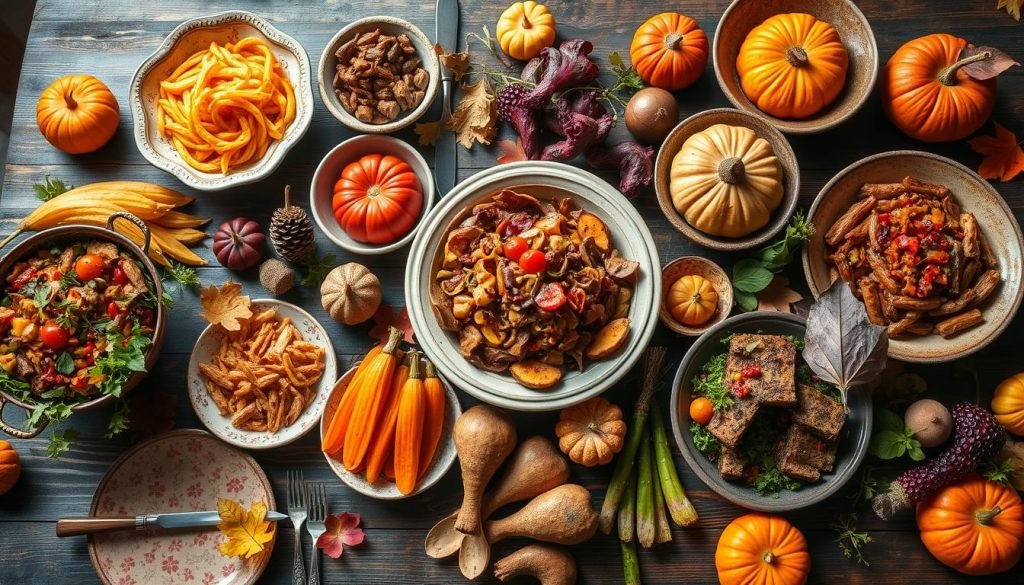
Autumn’s bounty includes a variety of fruits and vegetables that are perfect for seasonal cooking. Apples, pears, and quince are just a few examples of the fruits that come into season, while root vegetables like carrots, parsnips, and beets become dietary staples.
The use of these ingredients in fall celebration cuisine not only highlights their flavors but also celebrates the harvest season’s abundance.
Warming Spices and Comfort Foods
As the weather cools, warming spices like cinnamon, nutmeg, and allspice become integral to fall cooking, adding depth and warmth to both sweet and savory dishes. Comfort foods, including hearty stews and casseroles, are also characteristic of the season, providing physical and emotional warmth.
The combination of these spices and ingredients in traditional fall recipes creates a sense of coziness and nostalgia, making them a central part of fall celebration cuisine.
Thanksgiving Table: Classic and Creative Dishes
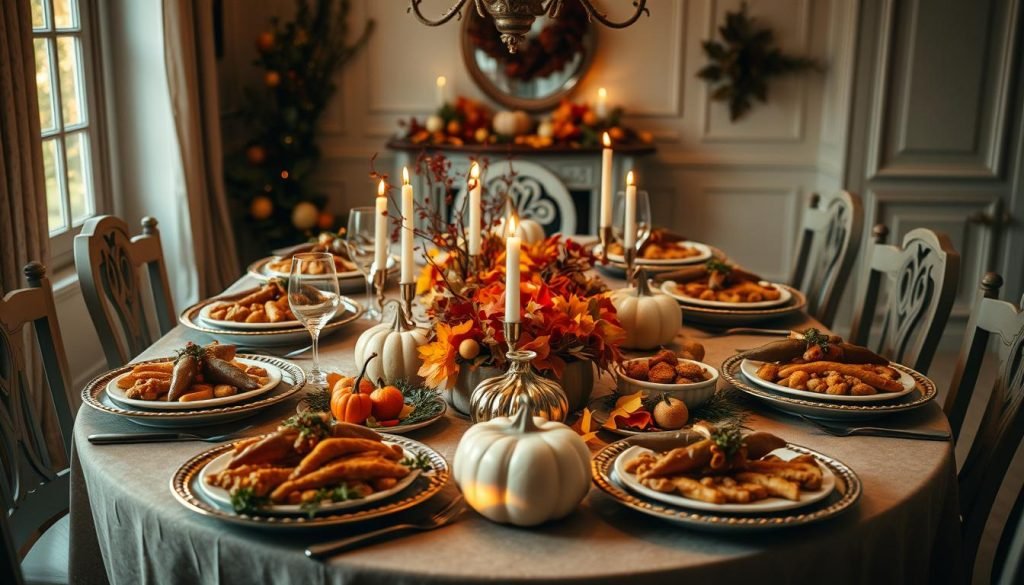
The Thanksgiving table represents America’s most iconic food celebration, blending Native American ingredients with European cooking techniques. This special meal is a time for family and friends to come together and appreciate the spirit of gratitude.
Traditional Thanksgiving Staples
Traditional Thanksgiving staples include turkey, stuffing/dressing, cranberry sauce, mashed potatoes, gravy, and seasonal vegetable sides. These classic dishes vary by region but remain the core of most Thanksgiving meals.
Modern Twists on Holiday Favorites
Modern twists on Thanksgiving classics incorporate global flavor influences and alternative cooking methods. Creative approaches to traditional ingredients, such as deep-frying or smoking turkey, add a new dimension to the holiday meal.
Winter Holiday Feasts: From Christmas to New Year
From Christmas to New Year’s Eve, winter holidays are a time for indulging in delicious and symbolic foods. The season is characterized by a variety of traditional and cultural feasts that bring people together.
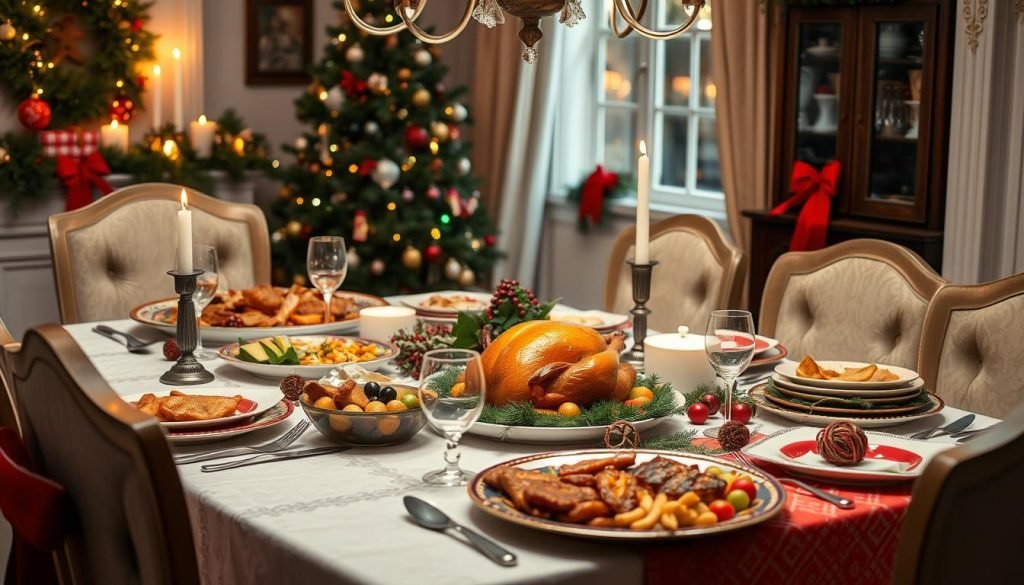
Christmas Dinner Centerpieces
Christmas dinner centerpieces vary by cultural tradition. For instance, roast beef and Yorkshire pudding are staples in British traditions, while ham or turkey are common in American homes. Italian Christmas Eve celebrations often feature seafood feasts, and tamales are a staple in Mexican traditions.
Festive Desserts and Sweet Treats
Festive desserts and sweet treats are a highlight of the winter holiday season. Cookie baking, gingerbread house construction, and candy making are popular activities that bring families together. Traditional Christmas baking incorporates warming spices, dried fruits, and nuts, preserving centuries-old techniques in recipes like fruitcake, stollen, and panettone.
New Year’s Eve Celebration Foods
New Year’s Eve celebration foods often incorporate symbolism for prosperity and good fortune. Different cultures feature specific ingredients, such as tamales, greens, lentils, pomegranate, noodles, black-eyed peas, and pork, which are believed to bring luck and abundance in the coming year.
Winter holiday beverages, including eggnog, mulled wine, hot chocolate, and festive punches, warm both body and spirit during cold-weather gatherings. The contrast between rich, indulgent holiday foods and the tradition of New Year’s resolution diets creates a distinctive rhythm to winter eating patterns.
Conclusion: Celebrating Year-Round With Seasonal Flavors
Celebrating with seasonal flavors is a way to honor our traditions while embracing the unique offerings of each time of year. Throughout the year, seasonal celebration cuisine provides a framework for connecting with our cultural heritage and family traditions. By exploring diverse recipes and cooking techniques, we can create meaningful meals that bring our family together. As we cook and share dishes inspired by the changing seasons, we capture the spirit of celebration that defines us.